Daily output and ready ice measure different things.
The KB ICE Buying Guide
Ice Maker Singapore Guide. Choose the right machine.
The right ice maker is the one that meets your busiest period, fits the available space and water setup, and remains practical to clean. Compare ice type, usable output, storage, ventilation and electrical compatibility before you buy.
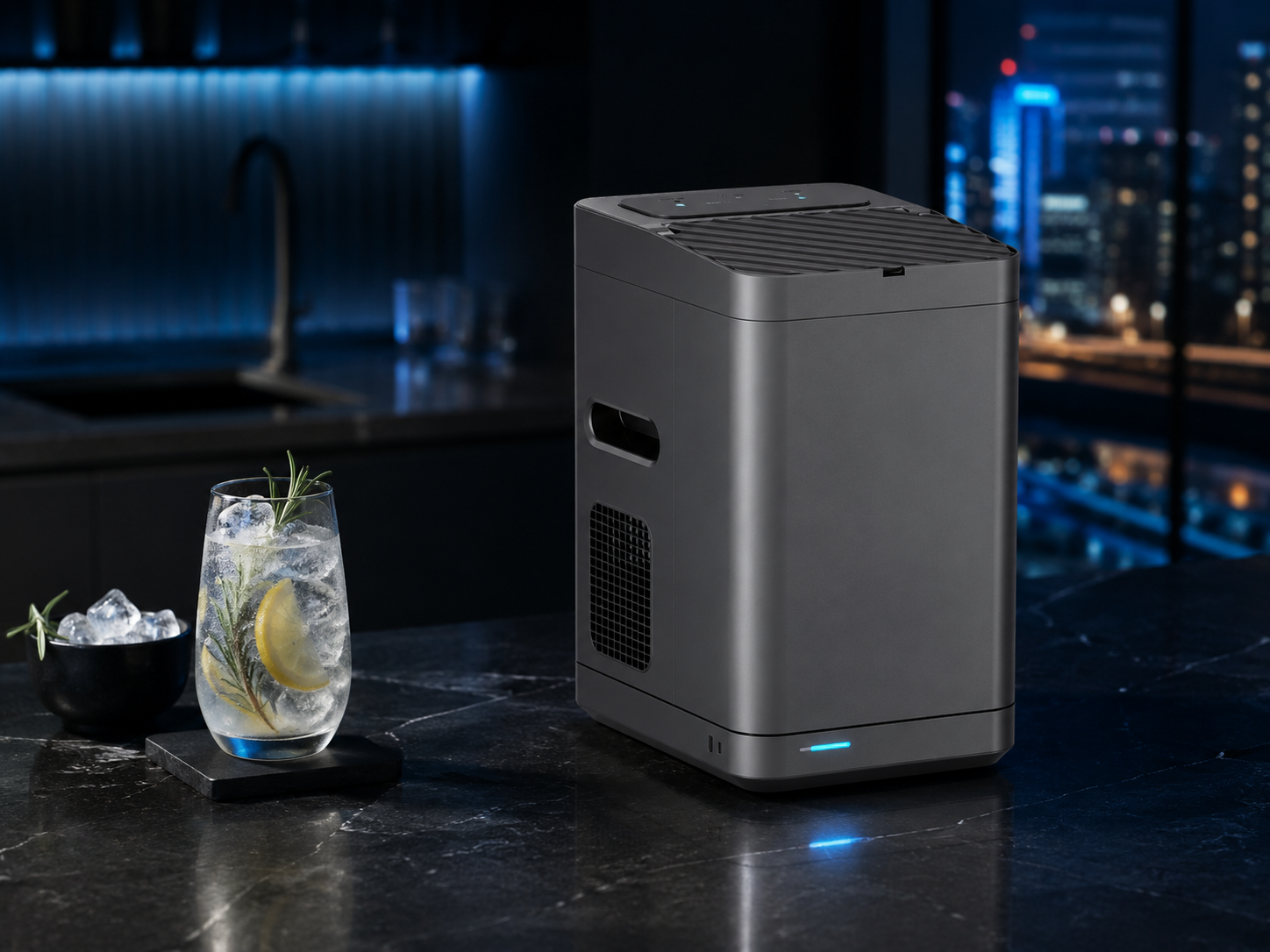
Five checks before you buy.
These five points prevent the most common ice-maker buying mistakes.
Peak demand matters more than an average day.
Include lid, airflow, plug and refill access.
Texture and melting rate affect every drink.
Hygiene is part of everyday performance.
Jump to a section
Start with the basics
What is an ice maker?
An ice maker is an appliance that freezes water into a repeatable ice form and releases the finished ice into a basket or storage bin. Unlike an ice tray, it automates the freezing and harvesting cycle.
Consumer machines are commonly designed for a countertop or portable setup, while commercial machines are built around higher throughput, larger bins or integration with beverage operations.
A dedicated machine is most useful when freezer trays are too slow, freezer space is limited, or demand arrives in bursts. A household that makes one cold drink a day may be well served by trays. A family that entertains, a busy office pantry or a café serving iced drinks throughout a shift has a stronger case for on-demand production.
Freezer ice trays vs a dedicated ice maker
| Consideration | Freezer trays | Dedicated ice maker |
|---|---|---|
| Upfront cost | Low | Higher; varies by format and capacity |
| Speed | Requires planning and freezer time | Runs repeated ice-making cycles |
| Freezer space | Uses shelf or drawer space | Uses counter or floor space instead |
| Quantity | Limited by the number of trays | Better for repeated or higher-volume use |
| Convenience | Manual filling, carrying and releasing | Automated freezing and harvesting; refilling may still be manual |
| Cleaning | Trays and freezer area need cleaning | Reservoir, basket or bin, and water-contact parts need routine cleaning |
Texture changes the experience
Nugget ice vs conventional cubes.
Nugget ice
Softer, more porous and designed for greater contact with the drink.
Conventional cubes
Harder and denser, normally better when slower melting is the priority.
Nugget ice is made from small ice particles that are formed and compacted into soft, irregular nuggets. Conventional cubes are generally harder and denser. Nugget ice offers a softer bite and more contact with the drink; solid cubes normally last longer in situations where slower melting matters.
Soft drinks, tea and casual sipping can benefit from nugget texture. Spirits served slowly, an ice bath or long-duration cooling may favour harder, denser ice. If texture is central to your decision, read our guide to what nugget ice is and why it is so chewable.
Choose for the environment
The main types of ice makers.
Start with how and where the machine will be used. Portability, a permanent countertop position and sustained commercial service lead to different equipment decisions.
Portable
Moveable by design
Portable describes a unit that can be moved more easily than a built-in or plumbed machine. It does not necessarily mean cordless.
Explore portable options →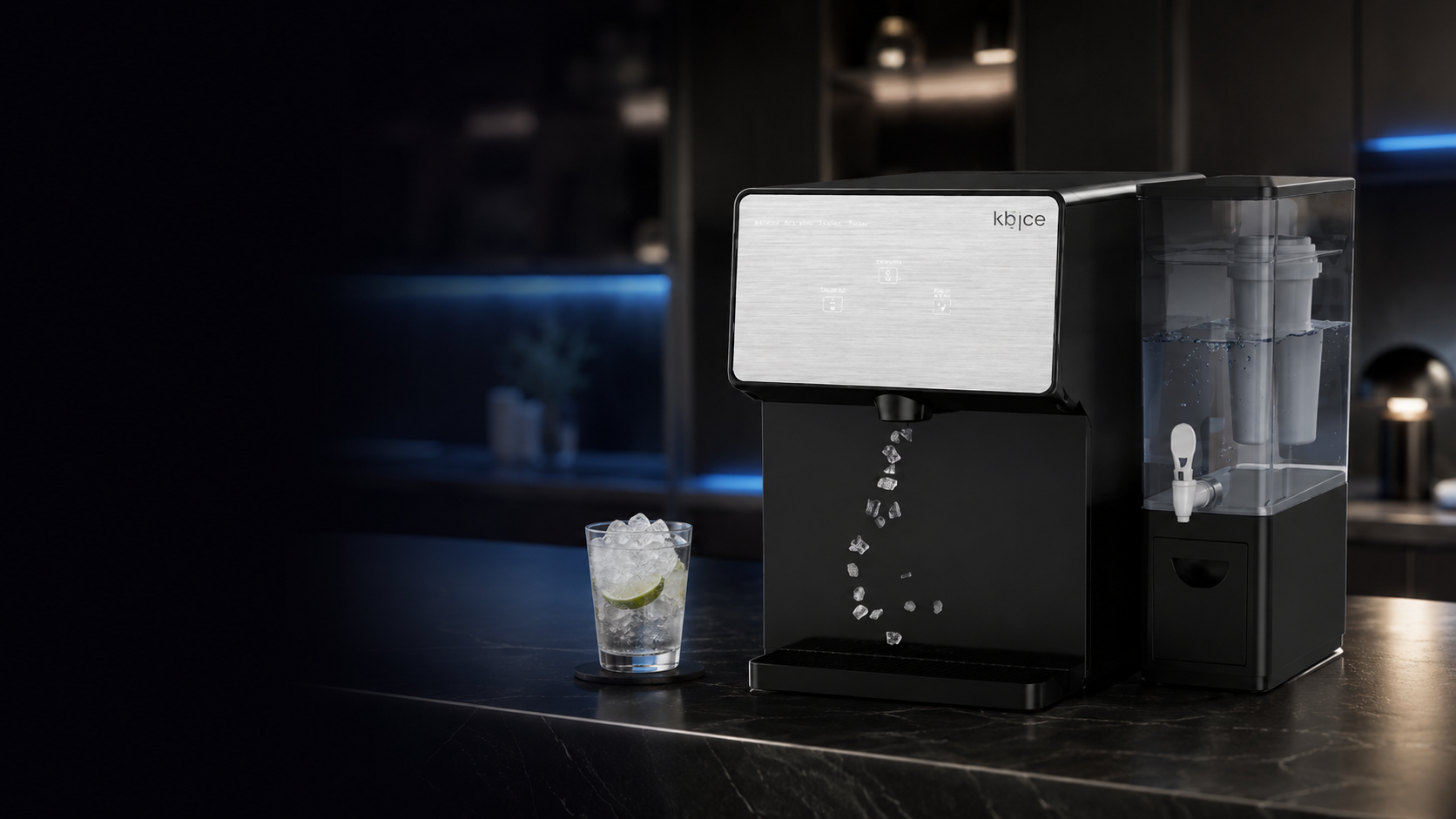
Countertop
Ready for daily use
Countertop machines suit kitchens and office pantries where frequent access and a permanent worktop position are acceptable.
Explore countertop options →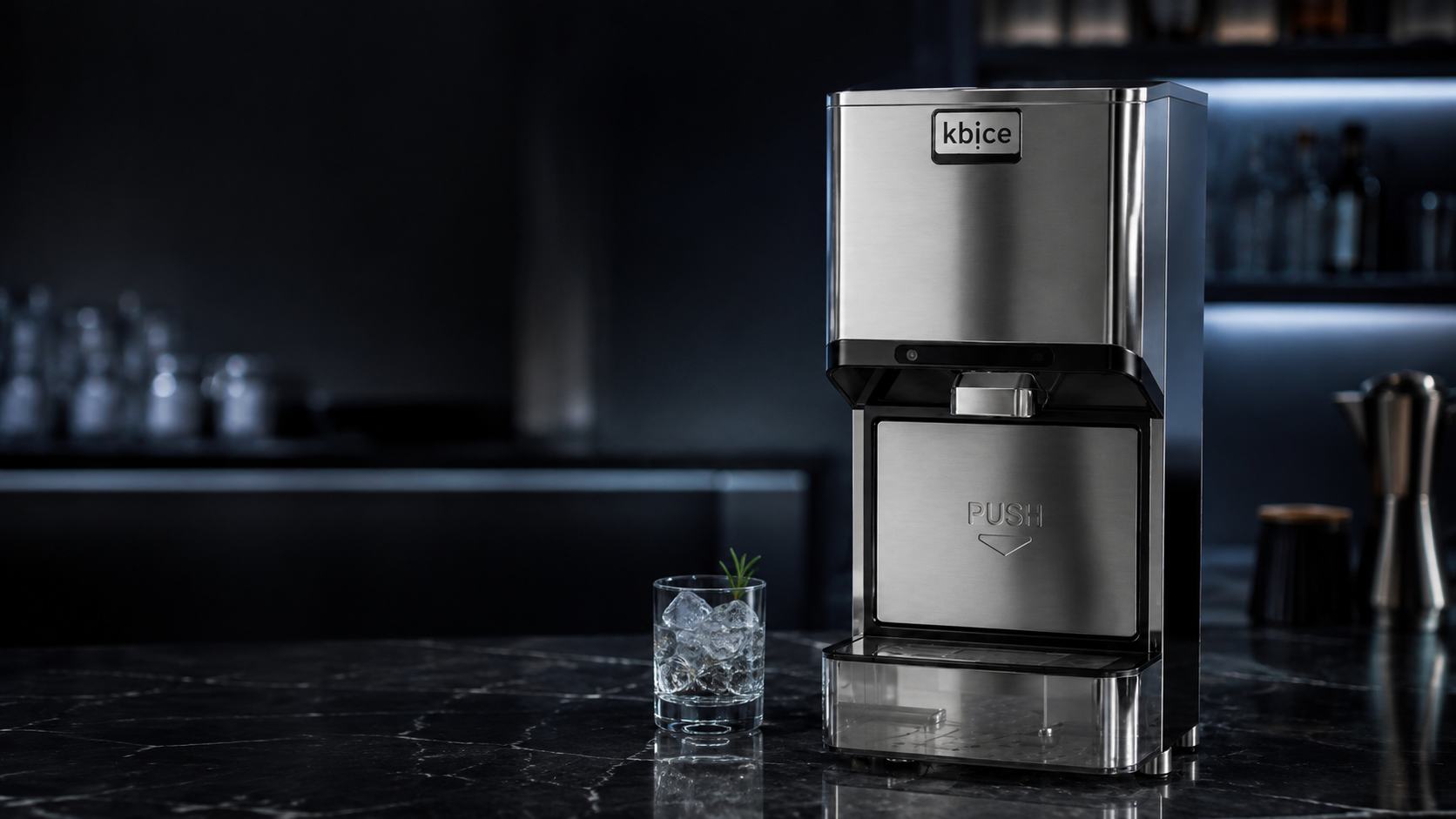
Commercial
Built for business
Commercial machines prioritise repeatable output, storage and serviceability for operations that depend on a reliable ice supply.
Explore commercial solutions →
For business buyers: assess the busiest hour, not only the headline 24-hour rating. Food-service equipment must also fit your cleaning, handling, drainage and service procedures.
Read beyond the headline number
Specifications that actually matter.
Daily ice output
A throughput figure measured over a defined period, often 24 hours under stated test conditions. Ambient temperature, water temperature, airflow and usage habits can affect real output.
Ready storage
The maximum amount the basket or bin can hold at once. If demand arrives together, ready storage can matter more than the daily production total.
First-ice time
Useful for spontaneous drinks, but not proof that a small unit can keep pace with a crowded party or lunch rush. Compare startup, continued output and storage together.
Water supply
An internal reservoir is self-contained. An external tank adds accessible water capacity. A direct connection reduces manual refilling but requires compatible plumbing and sometimes drainage.
Use potable water and only reservoirs, external tanks, filters or water lines approved for the machine.
Plan the complete setup
Space, power, noise and cleaning.
Measure the full space, not just the footprint
Start with width and depth, then add the practical clearance around the machine. The lid or access panel must open, warm air must escape, the plug must remain reachable, and the water reservoir or tank must be refillable. Leave room to remove the basket, wipe spills and clean the unit without shifting other appliances every time.
Singapore kitchens and pantries can be compact, so measure the intended counter and nearby overhead cabinets. Check that the surface is level, stable and protected from direct heat or sun. Do not place a machine beside a hob, inside a closed cabinet or where water can reach the electrical connection.
Electricity, noise and placement in Singapore
Singapore's standard electricity supply is 230V at 50Hz. Confirm that the appliance is rated for local supply and supplied with an appropriate plug before purchase. Avoid unsafe adaptors or overloaded extensions, keep the socket dry, and follow the manufacturer's electrical instructions. Any new or modified fixed wiring should be handled by a Licensed Electrical Worker.
Consider compressor, fan and ice-drop sounds, not only a headline noise figure. A level surface can reduce vibration. In an open office or quiet home, think about whether the machine will run during calls or sleep.
Cleaning and maintenance
Treat ice as ready-to-consume food. Empty stale ice and water, wash accessible water-contact parts as directed, keep scoops and hands clean, and inspect areas that stay damp. The exact cleaning frequency and descaling method depend on the model, water conditions and usage, so the operating manual should take priority over generic advice.
Before cleaning, switch off and unplug the machine unless the manual specifies an automated cleaning cycle that requires power. Do not mix cleaning chemicals, and rinse exactly as directed. For a business, document the cleaning responsibility and schedule instead of relying on someone to notice when the machine looks dirty.
Use your own serving data
How much ice do you actually need?
Estimate demand from your own drinks rather than relying on a universal per-person rule.
For several representative days, count the number of iced servings and measure the ice used in a typical cup with a kitchen scale. Multiply the two, then add a reasonable buffer for hotter days, visitors, spillage and service peaks.
- Measure the grams of ice in one typical serving.
- Multiply by the number of servings during your busiest realistic period.
- Add ice used for jugs, chilling or food display, if applicable.
- Compare peak demand with both ready storage and production speed.
- Allow recovery time; a 24-hour output figure may hide a shortfall during a one-hour rush.
Choose around real use
Which users benefit most?
Homes & entertaining
Prioritise footprint, easy refilling, basket access and a cleaning routine that fits normal kitchen habits. If use is occasional, compact storage may matter more than maximum capacity.
Office pantries
Look beyond headcount. Consider simultaneous lunchtime use, who refills the water, who cleans the machine and whether noise will distract nearby staff.
Cafés, restaurants & hotels
Map ice to the menu, cup size, service periods and backup plan. Ensure safe handling, accessible cleaning, adequate drainage and appropriate service support.
Flexible venues
Studios, salons, showrooms and event teams may value a self-contained unit. Balance mobility with recovery speed, transport requirements, water and power at the destination.
Save this before you shop
Practical ice maker comparison checklist.
| Check | Question to ask | Why it matters |
|---|---|---|
| Ice form | Do we want nugget, cube or another format? | Affects texture, melting and drink experience |
| Peak demand | How much ice is used in the busiest hour? | Reveals storage and recovery needs |
| Daily output | Under what test conditions is output stated? | Makes model comparisons more meaningful |
| Water | Reservoir, external tank or direct connection? | Determines refilling and installation |
| Space | Are lid, ventilation and cleaning clearances included? | Prevents an unusable installation |
| Power | Is it compatible with 230V/50Hz and local use? | Supports safe, reliable operation |
| Cleaning | Which parts are removable and what does the manual require? | Affects hygiene and everyday effort |
| Support | What warranty, service and parts support are available? | Matters when the machine becomes part of daily operations |
Avoid these shortcuts
Common buying mistakes.
- Buying by the 24-hour output figure while ignoring the much smaller storage basket.
- Measuring only the body and forgetting the open lid, rear airflow and refill access.
- Assuming portable means battery-powered, lightweight or suitable for use while a vehicle is moving.
- Choosing an ice texture without considering the drinks and serving time.
- Leaving cleaning responsibility undefined in a shared office or business.
- Using a consumer machine for mission-critical commercial service without checking its intended duty and support.
Frequently asked questions
Ice maker questions, answered.
Do ice makers need a water connection?
Not all of them. Many portable and countertop models use an internal reservoir or compatible external tank, while some built-in and commercial machines require a direct water connection. Always check whether drainage is also needed.
How much ice does a household need per day?
There is no reliable universal figure. Measure the ice in your usual serving, multiply by the number of drinks on a busy day, then add demand for guests, jugs or chilling. Also check whether several servings are needed at the same time.
Is a countertop ice maker the same as a freezer?
No. Many countertop baskets collect freshly made ice but do not keep it frozen indefinitely. Unused ice may melt and be recycled by the machine. Transfer ice to a freezer if the manual allows and you need longer storage.
How often should an ice maker be cleaned?
Follow the manufacturer's schedule and clean sooner if usage, water conditions or visible residue require it. Shared and commercial environments should use a documented routine covering the reservoir, basket or bin, scoop and other water-contact parts.
Does a faster first batch mean higher capacity?
Not necessarily. First-ice time describes startup convenience. Capacity depends on continued production, bin size and recovery during demand. Compare all three.
Is nugget ice better than cube ice?
It depends on the drink and preference. Nugget ice offers a softer, porous texture and more drink contact. Harder, denser cubes can be better where slower melting and lower dilution are priorities.
Can a home ice maker be used in a café?
Only if the manufacturer's intended use, output and operating conditions suit the task and the café can meet its hygiene and service requirements. For sustained or essential service, a commercial machine is usually the more appropriate category.
Your next step
Choose around your busiest real use.
Decide on the ice texture, calculate your busiest serving period, confirm storage and water requirements, then check space, power, noise, cleaning and service support.
Editorial sources
- Singapore Consumer Product Safety Office: local electricity supply and household appliance safety
- Energy Market Authority: electrical safety and Licensed Electrical Workers
- Singapore Food Agency: responsibilities for safe food handling and storage
- CDC: cleaning and maintaining ice machines, dispensers and storage chests
Product-specific performance, installation and cleaning requirements vary. Always confirm current specifications against the live product page and operating manual before purchase or installation.