Formed, not crushed
Fine ice is compressed into small nuggets during production.
Ice Guide 02
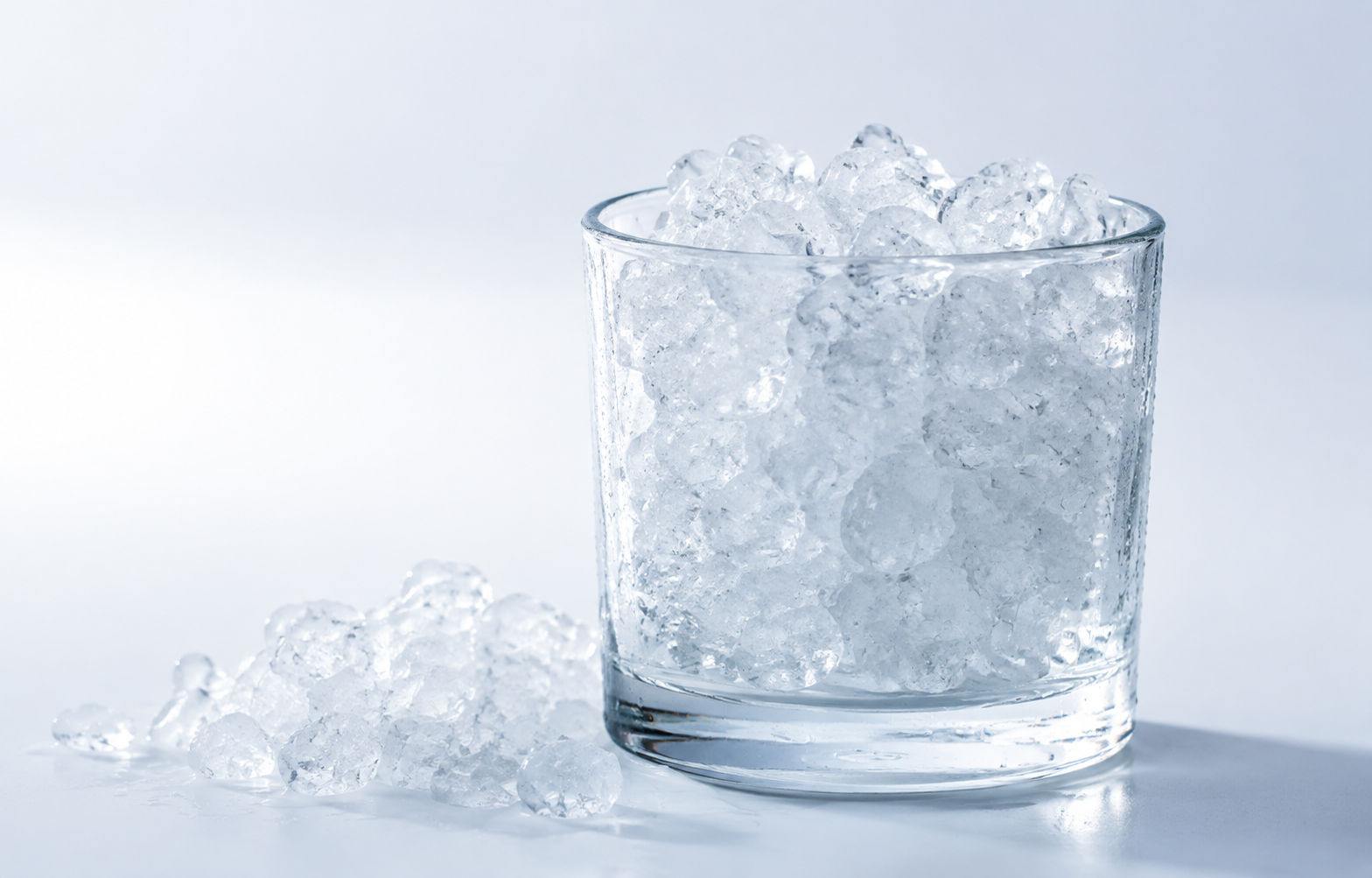
Nugget ice is made by forming and compacting fine ice particles instead of freezing water into one solid moulded cube. Its porous, irregular structure gives it a softer chew and more contact with your drink.
The short answer
Nugget ice changes texture, cooling speed and the way a drink feels. It is a distinct ice form, not simply a smashed cube.
Fine ice is compressed into small nuggets during production.
Internal gaps make it easier to fracture than a dense cube.
Many small pieces create a large total contact area.
Rapid cooling may come with more dilution than large cubes.
Its soft bite suits soda, tea, sparkling drinks and casual sipping.
Definition
Nugget ice consists of small, loosely compacted pieces with tiny air spaces and an uneven surface. The pieces are usually rounded or irregular rather than geometrically perfect.
It feels lighter and less solid than a conventional cube, which is why people often describe its texture as soft, chewable, pebble-like or snow-like. Liquid can move around the many nuggets and into gaps within their porous structure.
The name describes an ice form, not one universal size or recipe. Different machines can produce nuggets that vary in firmness, moisture, shape and dimensions. Two products labelled nugget ice can therefore feel slightly different in a drink.
Production method
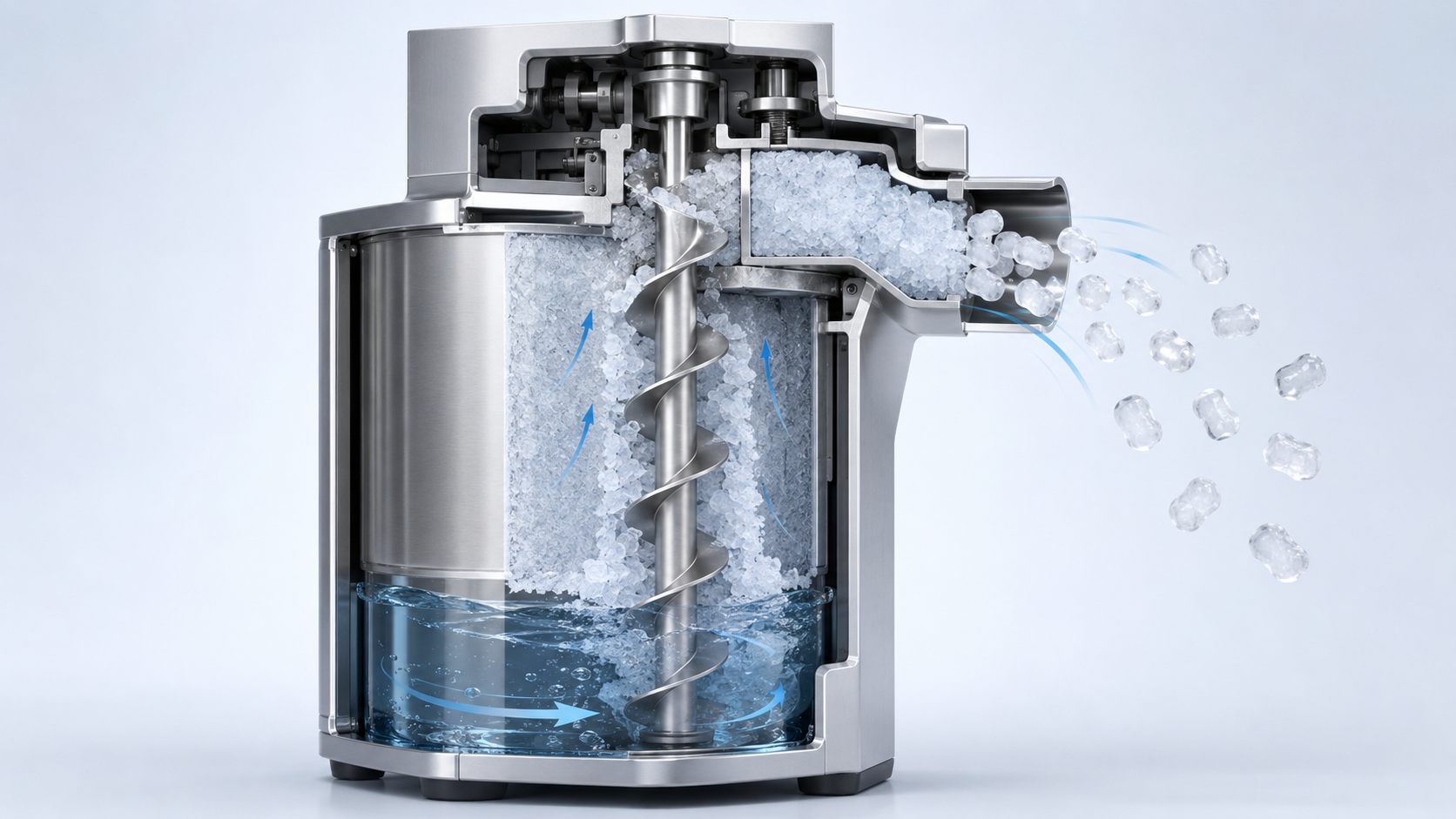
At a high level, a nugget ice maker freezes water into fine ice, moves that ice through a forming mechanism and compresses it into small pieces. A cutting or breaking step then creates individual nuggets.
Water becomes fine ice rather than one solid moulded cube.
The fine ice is moved and compacted through a forming mechanism.
The compacted ice is cut or broken into individual nuggets.
This continuous process differs from a conventional cube machine, which fills a mould or freezing surface and releases a more solid piece after it freezes. It also differs from crushed ice, which starts as a larger frozen piece and is mechanically broken afterwards.
The texture
A traditional cube freezes into a relatively solid mass. Nugget ice is assembled from smaller ice particles and contains more gaps within its structure. That makes the nugget easier to compress and fracture than a dense cube.
The irregular surface and small bite size also shape the sensory experience. The ice yields more readily, and a little beverage can sit between and around the pieces.
Names explained
| Term | What it usually means | Important distinction |
|---|---|---|
| Nugget ice | Small, compacted pieces made from fine ice. | A produced ice form, not broken cube ice. |
| Chewy ice | A descriptive nickname for softer ice that people like to bite. | Not a precise technical standard or safety claim. |
| Pebble ice | A common name for small rounded or irregular nuggets. | Often used interchangeably with nugget ice. |
| Crushed ice | Larger ice broken into sharp or irregular fragments. | Usually harder and less uniform than formed nuggets. |
| “Sonic ice” | A consumer nickname associated with a similar chewable style. | Not a KB ICE brand name; no affiliation with Sonic Drive-In. |
Side by side
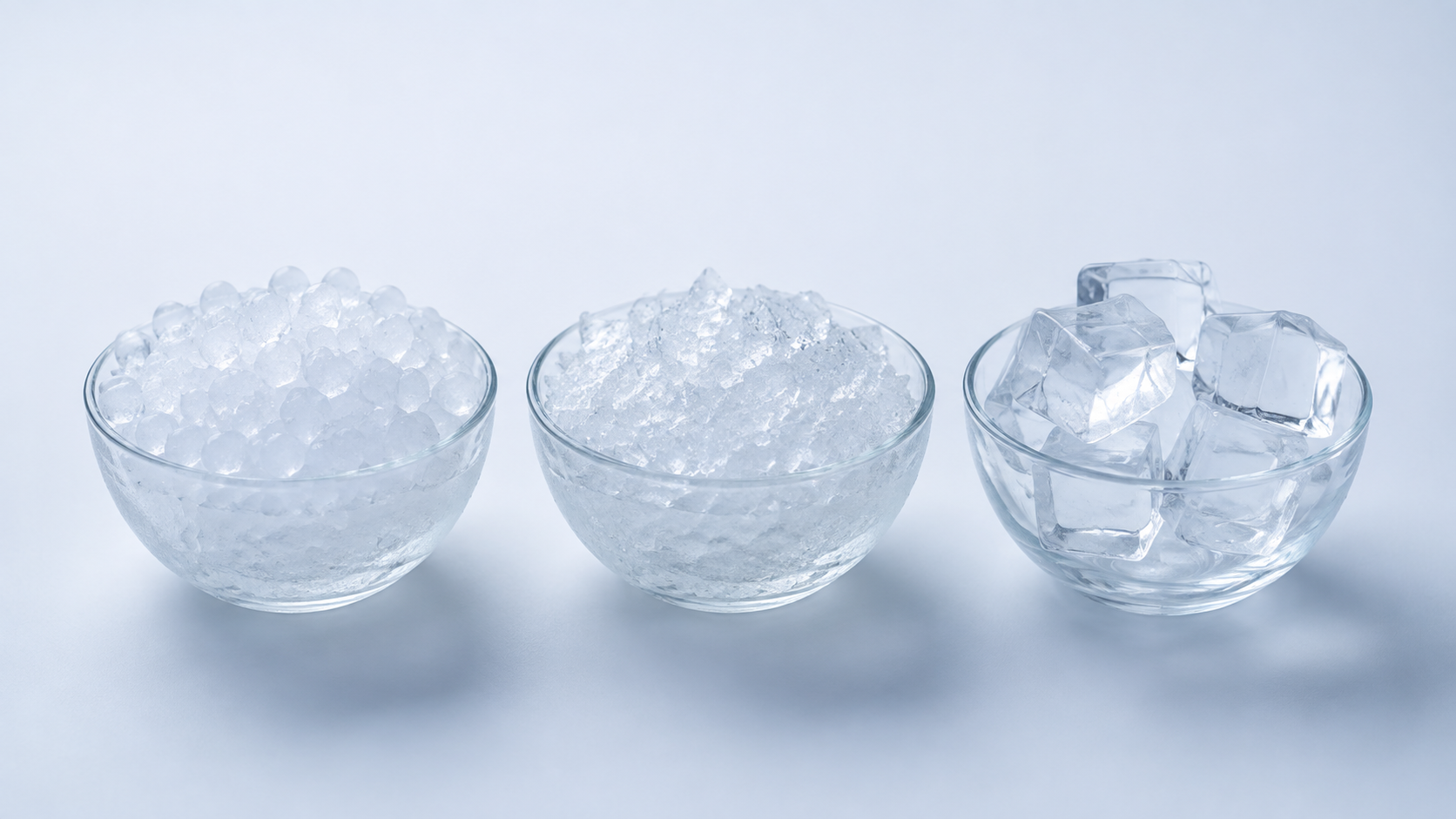
Nuggets prioritise texture and drink interaction. Conventional cubes prioritise solidity and generally last longer, especially when they are large and dense.
Crushed ice is broken from larger frozen pieces and can vary from chips to sharp chunks. Nugget ice is formed into a more consistent compacted shape.
Many small nuggets expose more total ice surface to a drink than a few large cubes. That can help the drink cool quickly, while also creating more opportunity for melting. Crushed ice also provides high drink contact, but nuggets offer a more uniform soft bite and tend to flow more comfortably through a cup.
The experience
The appeal comes from the way the nugget yields. Rather than meeting the teeth like one solid block, it breaks down through its compacted structure. The irregular surface also holds a little beverage, so the remaining ice can carry some of the drink's flavour.
People may enjoy the sound, tactile sensation and small bite size. That preference is subjective. Someone who wants minimal ice texture may prefer large cubes, while someone who likes to sip and enjoy the remaining ice may prefer nuggets.
Serving ideas
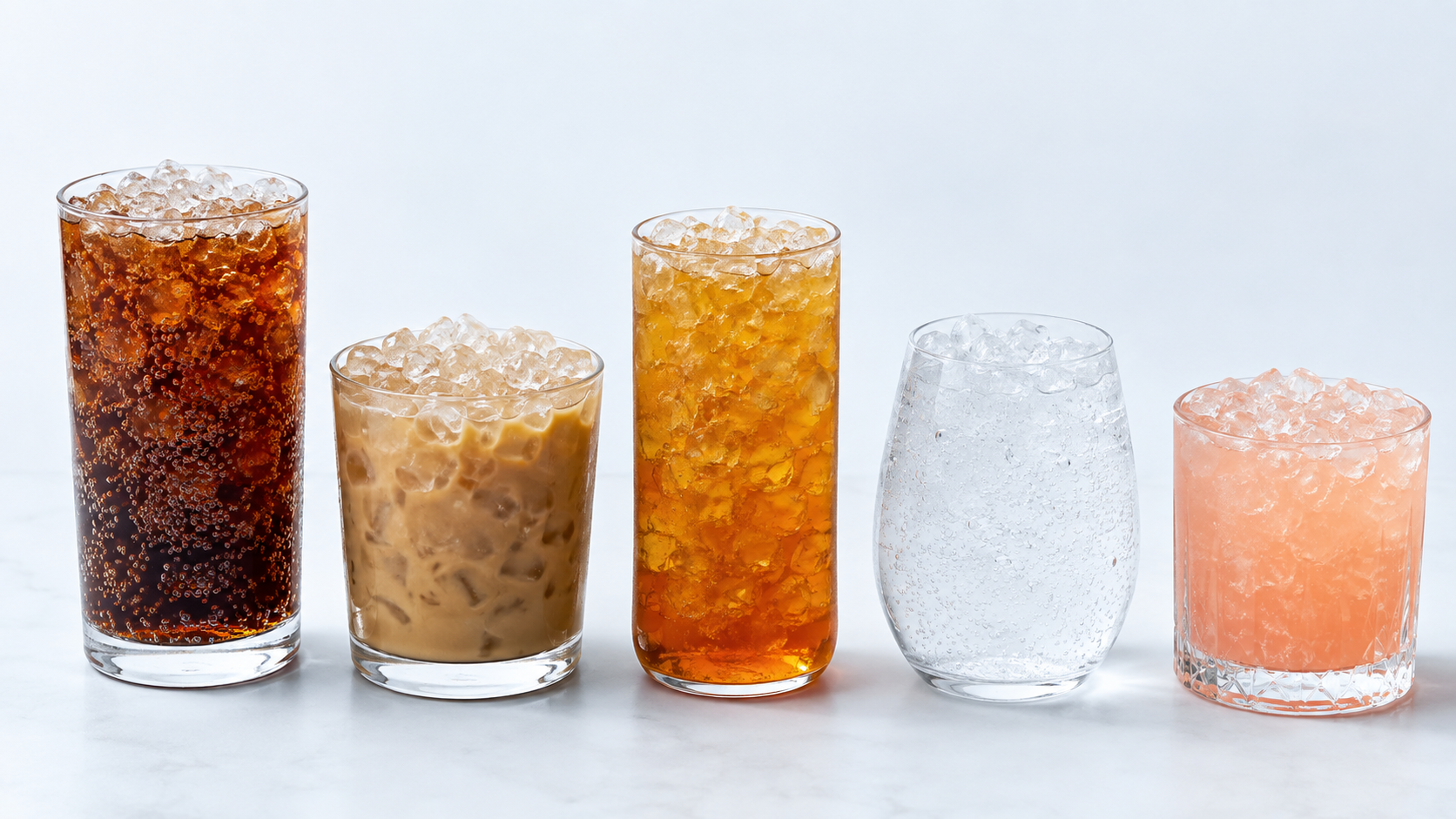
Many small cooling surfaces suit fountain-style soda, soda water and flavoured sparkling drinks. Pour slowly to control foaming and preserve carbonation.
Nugget ice gives coffee a lighter, textured feel. Cool hot coffee first or use a recipe deliberately calibrated for a full cup of ice.
Black tea, lemon tea, fruit tea and milk tea work well, particularly when mixed or shaken before service. Start with a recipe designed for ice.
Useful for long drinks, highballs and julep-style serves where texture and fast chilling are part of the presentation. A large cube may be better for slow dilution.
For plain or flavoured water, nuggets create an easy, continuously cold sip and fit well in tumblers. Use potable water and handle the ice with a clean scoop.
Cooling & dilution
Often, yes - when compared with the same mass of ice formed into larger dense cubes under the same conditions.
Smaller pieces provide more surface contact with the drink, while nugget ice has a less solid internal structure. These factors can contribute to faster heat transfer and melting.
That does not mean every drink becomes watery immediately. A cup generously packed with cold nugget ice can remain pleasant for a normal drinking period. Dilution becomes more noticeable when the beverage starts warm, the room is hot, the cup sits for a long time or there is too little ice.
Everyday settings
Useful for households that make iced drinks frequently, enjoy the texture or host friends. Check counter space, water method, cleaning, output and basket capacity before buying.
Supports water, tea and coffee without storing bags of ice. Decide who refills and cleans it, and whether output and noise suit the lunch peak and nearby desks.
Its visual texture makes easy drinks feel considered. Start production early, use suitable frozen storage if permitted and serve with a clean scoop.
Clear up the confusion
From outlets to countertops
The format used to be encountered mainly at beverage outlets and hospitality venues. Countertop and portable nugget ice makers have made the same general style accessible at home, where people can produce it for daily drinks instead of buying and storing bags of ice.
The appeal also fits how people now build drinks at home. Iced coffee, sparkling water, fruit tea and mocktails are simple to prepare but gain a distinctive texture from the ice. A dedicated machine is not essential, but frequent users may find it turns an occasional treat into part of their routine.
Frequently asked questions
No. Crushed ice is normally made by breaking larger frozen pieces. Nugget ice is formed from fine ice and compacted into small, softer nuggets.
The terms are often used interchangeably by consumers. Neither guarantees one exact size or firmness, so compare the actual finished ice when possible.
Some consumers use the nickname for chewable, pebble-like ice associated with Sonic Drive-In. It is not a KB ICE brand name, and KB ICE has no affiliation with Sonic Drive-In.
It often melts faster than larger dense cubes because it has more surface contact and a less solid structure. The result also depends on drink temperature, room conditions, time and the amount of ice used.
It is softer than many cubes, but chewing any ice can still chip enamel or crack teeth. Avoid hard biting, especially if you have sensitive teeth or dental work, and consult a dental professional if concerned.
Soft drinks, iced tea, sparkling water, fruit drinks, iced coffee and long mixed drinks are common matches. Large dense cubes may be better when slow dilution matters.
Many countertop machines make and collect ice but are not freezers. Unused ice may gradually melt and be reused in the production cycle. Check the individual model's storage design and instructions.
The real reason to choose it
Nugget ice is not a universal upgrade over every cube. It is a different format built around a softer bite, rapid drink contact and a cup-filling texture. If that matches the way you drink, a nugget ice maker can make sense for home, office or entertaining.
Product-specific texture, output, storage and cleaning requirements vary. Confirm current specifications against the live product page and operating manual before purchase or use.